
You are currently browsing the category archive for the ‘Language’ category.
We’re almost four years into the 20s and the sooner we bring back the concept of decades the better. Decades give people, especially young people, a temporal identity and a grounding in history. Decades emphasize the importance of now, but also connect us to the past in a way that doesn’t alienate us from our elders or youths in the way the concept of “generations” does automatically. Decades are a key element of narrative storytelling, encourage critical thinking through comparing/contrasting eras, and make it easier to discuss the future. In sum, decades benefit mental health, social inclusion and connection, movement building, and resistance to the aimless void of late capitalism. Our ability to exercise historical agency and preserve historical memory may depend on us reviving this concept.
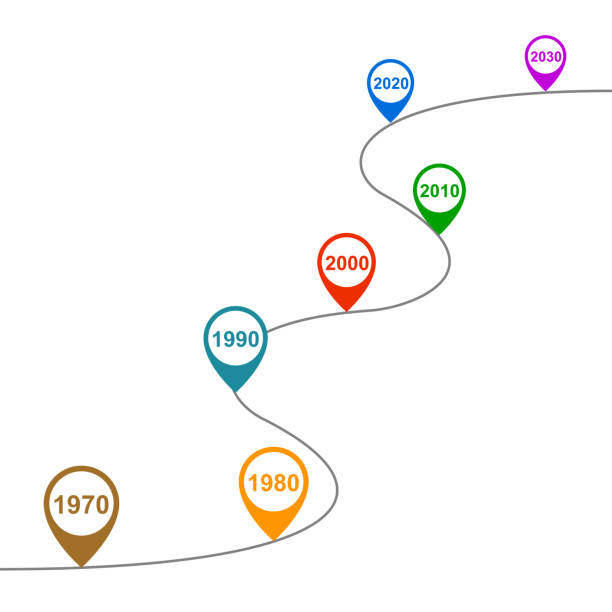
If you’re 35 or older, you remember the 60s, 70s, 80s, and 90s as regular talking points. Both in the historical sense of “what was the spirit of the 60s?” and in the future-focused sense of “this will be THE trend of the 90s.” The concept of decades permeated regular conversation, tying people together and rooting them in a temporal home, whether you were talking about music, sports, film, fashion, politics, games, or literally anything. It made it natural and popular to compare eras of things, which is a basic building block of both historical study as well as critical thinking itself. It also helped people form an identity, in the sense of “I’m a child of the 70s” – one shorthand reference point that contains a vast easily-recalled cultural context filled with people, events, products, art, styles, and social struggles. It was a source of pride to be associated with a decade.
When Y2K hit, the computers were just fine. Better than ever, in fact. But we weren’t, because we suddenly lost a very powerful tool for understanding our social environment. Without the concept of decades, we wandered into an amorphous fog without beginning or end, where we became easy-pickings for a consumer capitalism that thrives by developing isolated, disoriented worker-spectators. When ignorant of our past and uninterested in our future, we rarely make trouble for the ruling class.
At first, some people resisted the change. They coined names for the decade-to-be, but none caught on. They sounded forced, so they were relegated to the realm of jokes (Try to have a serious conversation about “the noughties”). Nothing stepped in to bridge the chasm.
It wasn’t a huge problem at first, because the 90s were such a recent frame of reference, so we could keep the concept of decades alive by just filing the present under “post-90s” or “this decade.” All the conversations we were accustomed to, where we compared trends in pants, or hair, or anarchist politics, kept rolling for a while, they just had this weird stand-in where you’d have to compare previous decades to the vague concept of “now.” As in, “you guys had VCRs in the 80s, but now we have the far-superior technology of DVD players, which will remain popular forever.”
Ten years passed. A new decade was scheduled to be starting, but no one took notice. The concept of decades wasn’t revived. Instead, it faded into oblivion. Maybe we were too buried under the infinite scroll of social media, our heads down, absorbed by our smartphones, or too obsessed by the latest streaming content, that we lost the ability to form long-range narratives. Our shared experience of the era itself began to fracture, as our attention scattered into increasingly fragmented niches of the spectacle, which concealed the fact that we were largely all doing the same thing at the same time. Or maybe we were so emotionally beaten down by the seemingly endless “War on Terror” and apocalyptic ecological catastrophe that we simply didn’t have the energy to think of ourselves as historical agents, and therefore couldn’t be bothered with putting a name on the era we were living through, even though “the teens” was an obvious and pleasant choice.
It’s not as if there weren’t massive and historically-important movements for social change happening in that decade. From the Arab Spring to Occupy Wall Street to Black Lives Matter to MeToo to Transgender visibility, millions of people were organizing, shifting social norms, and becoming empowered to radically improve society in ways perhaps more profound than we know. But compared to movements of the 60s, 70s, 80s, or 90s, these new movements are unusually obscured, and perhaps in danger of being overlooked.
Organizers of these world-changing efforts – people like Alicia Garza and Marisa Holmes – should be recognized and remembered for their actions. Even more importantly, our understanding of how that decade’s movements arose, why they were so effective, and also what their shortcomings were, should be the topic of regular conversation so that we may improve upon them in the future. Yet, it’s nearly impossible to have a productive, civil version of such a discussion on social media, and it may be nearly impossible for a social movement in this day and age to outlast the ephemeral confines of a hashtag.
This is not to suggest that these movements will be forgotten, or to downplay the excellent work of the chroniclers of these efforts, who have produced worthwhile books, documentaries, and other media that actively preserve this historical memory. Instead, I suggest it is unfair to those culture-defining social movements that we can’t immediately recall their powerful messages, images, and actors through a universally-agreed-upon phrase like “the teens” in the same way that “the 60s” immediately conjures such thoughts of the Civil Rights Movement or the anti-Vietnam War movement.
By the way, don’t give me this crap about “generations.” The Civil Rights Movement/Black Freedom Struggle was driven forward by people of all ages, from elders like A. Philip Randolph to middle-aged people like Ella Baker, to children like those who walked out of school to pack the Birmingham jails. As far as I’m aware, the fear-mongering associated with “rebellious youth” has always existed. For sure it existed in the 60s, when the mass media did their best to demonize the anti-authoritarian, hopelessly “feminized” “Baby Boomers”, effectively blaming young people for everything wrong with the world. We’ve come full circle today, blaming those same people, who are now old, for the exact opposite reasons.
“Generations” are a fake conceptual tool used to divide people. Since 2000, as the concept of decades has fallen away, in part it has been superseded by the nefarious concepts of “Millennials” and “Gen. Z.” These are identities which are inherently exclusive, and usually they are invoked for purely negative characterizations. Eventually, “Gen. Z” will get the same scorn that “Boomers” do now, and it will be just as baseless.
In contrast, decades are inherently inclusive. Everyone who was alive in the 90s can reminisce about what that decade was like for them. Even if our experiences were vastly different, we can find common ground through cultural touchstones like The Simpsons or Tupac. That kind of conversation is not just idle nostalgia. It is a collective remembering that allows us to form social bonds with neighbors, co-workers, and fellow activists, to each of whom the 90s is a small building block in their own identity-formation.
If you read comments on Youtube under videos of old music or TV shows (and I’m not recommending you do), you’ll regularly see people lamenting that we no longer live in the [insert decade here]. Some of those commenters are old and feeling nostalgic for the loss of their youth. That’s normal. But some of those commenters are young. They will often mention that they “just turned 16” (or another age of fragile identity-formation). And yet, here they are, wandering the interwebs, watching videos that were produced before they were born and wishing they could time-travel back to the 20th century.
Meanwhile, the 21st century is nearly a quarter complete, and its music and TV shows have been equally valuable, if not more so. But without the decades providing an automatic frame of reference for great artistic works, we struggle to recall exactly when they were released, or how they related to concurrent events in society or technology, or even our own lives. Without decades, people don’t know how to talk to each other about their own time period. And so they don’t. They just slowly forget, as everything is enveloped in a nebulous, meaningless haze.
What stories are children of this century learning about their own time, and where they fit in? What can they be proud of? What can they look forward to?
There’s a bunch of things we could do for a better future for all. Redistributing the wealth of the top 1%. Replacing the private automobile with free public transit. Dismantling the prison-industrial complex in favor of systems of transformative justice and accountability. Planting a billion trees. Those will take a lot of hard work and a long time.
One thing that would take very little effort, would bring us into connection with those around us of all ages, would help us cherish the present and look forward to the future, would empower us to find meaning and feel better, is to reintroduce the concept of decades. We can start now, by acknowledging publicly, and habitually, that we live in the 20s.*
* I mean no disrespect to the decade of the 1920s, a fine decade to study and discuss. But of the decades called “the 20s”, the current decade is far more relevant to everyone living today and for the rest of the 21st century. I don’t know at what point people stopped referring to the 1820s as “the 20s,” but surely it was before 1923.
Also republished by The Rag Blog and OpEdNews.
A little fun while I take a short break from the Zombie-Marxism series. [alex]
Origins of English Words and Class!
Originally published in shorter form, September 1, 2008
by Alex Knight, endofcapitalism.com
Would you rather receive a hearty welcome or a cordial reception?
Notice the imagery and feelings evoked by the two phrases. The first has a Germanic origin, the second, French. The English language is split along class lines — a reflection of the Norman invasion of England, almost 1000 years ago. German-derived English words carry with them a working class connotation, and French-derived words come off sounding aristocratic and slightly repulsive.
Even though cordial literally means “of the heart” in French (cor is Latin for heart), the picture that comes to my mind is a royal douchebag entering a hall of power amidst classical music and overdressed patrons and nobility. The image I get from hearty welcome is the extreme opposite: a single peasant reaching out to hug me and get me into their little hovel, out of the weather. Class is deeply embedded within our language, each word having its own unique history.
Wikipedia teaches many fun facts. The English language derives mainly from:
- Old German — the Angles and Saxons (from Saxony) conquered Britain in the 5th century, mixing with Scandinavians and developing Old English.
- Old French — the Normans (from Normandy) conquered England in 1066.

William the Conqueror, first Norman king of England, as depicted on the famous Bayeux Tapestry. His royal descendents would speak French until Henry V, 350 years later.
After the Norman invasion, England was dominated by a small French aristocracy, ruling over a much larger German working class. For more than three centuries, the rulers of England spoke French, while the common person spoke a Germanic language (Old English).
The two cultural groups began to intermarry after the Black Death of the 1340s wiped out half of the population, and over time the languages slowly merged, greatly simplifying the grammar of English, but also leaving a huge combined vocabulary.
The really interesting thing is that a lot of words in English carry a class connotation, based on whether they derive from French or from German. Words that mean basically the same thing will have either a formal, fancy, academic, upper-class connotation, or a casual, down-to-earth, gut-level, working-class feeling depending on the origin of the word.
Check out this list of synonyms! Read the rest of this entry »
Also published by Countercurrents and The Rag Blog.
Why Marxism Has Failed, and Why Zombie-Marxism Cannot Die
Or My Rocky Relationship with Grampa Karl
by Alex Knight, endofcapitalism.com
Part 2 – November 4, 2010
This is part of an essay critiquing the philosophy of Karl Marx for its relevance to 21st century anti-capitalism. The main thrust of the essay is to encourage living common-sense radicalism, as opposed to the automatic reproduction of zombie ideas which have lost connection to current reality. Karl Marx was no prophet. But neither can we reject him. We have to go beyond him, and bring him with us. I believe it is only on such a basis, with a critical appraisal of Marx, that the Left can become ideologically relevant to today’s rapidly evolving political circumstances. [Click here for Part 1.]

A brilliant, critical mind in his own time. Not infallible.
What Marx Got Right
Boiling down all of Karl Marx’s writings into a handful of key contributions is fated to produce an incomplete list, but here are the 5 that immediately come to my mind: 1. Class Analysis, 2. Base and Superstructure, 3. Alienation of Labor, 4. Need for Growth, Inevitability of Crisis, and 5. A Counter-Hegemonic World-view.
(It must be noted that many of these insights were not the unique inspiration of Marx’s brain, but were ideas bubbling up in the European working class movements of the 18th and 19th centuries, which was the political context that educated Marx. Further, Marx’s lifelong collaborator, Friedrich Engels, undoubtedly contributed significantly to Marx’s ideas, although Marx remained the primary theorist.)
1. Class Analysis
In the opening lines of the “Communist Manifesto” (1848), Marx thunders, “The history of all hitherto existing society is the history of class struggles.”
In other words, as long as society has been divided into rich and poor, ruler and enslaved, oppressor and oppressed, capitalist and worker, there have been relentless efforts amongst the powerful to maintain and increase their power, and correspondingly, constant struggles from the poor and oppressed to escape their bondage. This insight appears to be common sense, but it is systematically hidden from mainstream society. People do not choose to be poor or oppressed, although the rich would like us to believe otherwise. The powerless are kept that way by those in power. And they are struggling to end that poverty and oppression, to the best of their individual and collective ability.
The Manifesto elaborates Marx’s class framework under capitalism:
“Our epoch… possesses this distinctive feature: it has simplified class antagonisms: Society as a whole is more and more splitting up into two great hostile camps…: Bourgeoisie and Proletariat” (Marx-Engels Reader 474).
Marx relayed the words “bourgeoisie” and “proletariat” directly from the French working class movement he encountered in his 1844 exile in Paris, when he briefly ran with the likes of “anarchist” theorist Pierre-Joseph Proudhon. Marx himself reminds us, “No credit is due to me for discovering the existence of classes in modern society or the struggle between them.” Class analysis pre-dated Marx by many decades. Yet he articulated the class divisions of capitalist society quite clearly.
The “bourgeoisie” are those who own and control the “means of production,” or basically, the land, factories and machines that make up the economy. Today we know them as the Donald Trumps, the Warren Buffets, etc., although most of the ruling class tries to avoid public scrutiny. In short, the ruling class in capitalism are the wealthy elite, who exert control over society (and government) through their dollars.
Opposing them is the “proletariat,” which Marx defines as “the modern working class – a class of labourers who live only so long as they find work, and who find work only so long as their labour increases capital” (479). The working class for Marx is everybody who has to work for a wage and sell their labor in order to survive.
The divide between the bourgeoisie and proletariat as seen by Marx impacts society in deep and rarely understood ways. However, it is clear that as the rich rule society, they design it for their own benefit through politics, the media, the school system, etc. Inevitably, through “trickle up” economics, the rich get richer and the poor get poorer. As the class conflict worsens, for Marx there can only be one solution — revolution:
“This revolution is necessary not only because the ruling class cannot be overthrown in any other way, but also because the class overthrowing it can only in a revolution succeed in ridding itself of all the muck of ages and become fitted to found society anew” (193, “The German Ideology” 1845).
How could it happen? Marx rightly answers, “the emancipation of the working classes must be conquered by the working classes themselves.” Read the rest of this entry »
hey all,
check out this podcast of me being interviewed by Todd Curl. I’m excited to have my views recorded on audio for the first time. in this extensive 2-hour interview, I discuss:
- my hometown of Ambler, PA and its history with asbestos
- my life story of becoming politically aware and active
- peak oil and its interpretations
- the end of capitalism theory
- the nature of capitalism and enclosure
- resistance in China, Arizona, and around the world
- how radicals can use language to speak to everyday people
- healing from abuse and empowering ourselves to live better lives
here it is (click to play audio): Alex Knight Podcast
[alex]
Is Capitalism Approaching the Darkness of Knight?
Todd Curl
The Pigeon Post, August 2, 2010

Here is the interview I did with Alex Knight on Friday, July 30, 2010 at Alex’s home in Philadelphia:
At just 27 years old, Alex is already an accomplished writer and a full time activist for social justice. His site, The End of Capitalism, explores the theory of the unsustainable nature of a profit-driven global system that continues to exploit all of the earth’s resources for the sake of greed and power.
Having grown up in Ambler, Pennsylvania — the ‘Asbestos Capital of the World’ — Alex saw first hand the devastation of his home town through the greed of Keasbey and Mattison Corporation who continued to manufacture Asbestos through the 1970s despite the evidence that had existed for years that Asbestos causes Mesothelioma, a serious form of Lung Cancer.
Seeing the sickness of his community first hand eventually built the foundation for Alex’s future environmental and social activism. While at Lehigh University studying Electrical Engineering, Alex became more intellectually aware of the systemic patterns of exploitation and human/environmental devastation brought on by a long history of a Capitalist system concerned only with profit. Alex went on to get his Master’s in Political Science from Lehigh and now is a full-time activist in the Philadelphia area fighting for real and meaningful progressive change.
As Alex will tell you, there is nothing extraordinary about him. Being the quintessential “All American Boy” — he was born on the 4th of July — Alex discovered that real social change is ameliorated when we decide to join forces and fight the powers that are determined to keep us placated and in a constant state of fear so we will not question our own imprisonment of thought and continue to consume without thought or premeditation. For Alex, grassroots organizing and activism is the key to a sustainable future and when we define ourselves as left, right, Marxist, Anarchist, etc.. we just perpetuate petty semantic divides. Alex is proud to call himself “Progressive” as he is a tireless fighter for justice.
George Orwell was an English radical who wrote some of the most important books of the 20th Century, including Homage to Catalonia, about his experiences in the Spanish Civil War, Animal Farm (see cartoon adaptation), an allegory to Stalinism, and the infamous totalitarian novel 1984 (see film adaptation).
Orwell was an acclaimed writer because he wrote in clear and efficient English. He gave us this 1946 article, “Politics and the English Language” on how to write effectively. Check this out before penning/keying your next masterpiece! [alex]
A scrupulous writer, in every sentence that he writes, will ask himself at least four questions, thus:
- What am I trying to say?
- What words will express it?
- What image or idiom will make it clearer?
- Is this image fresh enough to have an effect?
And he will probably ask himself two more:
- Could I put it more shortly?
- Have I said anything that is avoidably ugly?
But you are not obliged to go to all this trouble. You can shirk it by simply throwing your mind open and letting the ready-made phrases come crowding in. They will construct your sentences for you — even think your thoughts for you, to a certain extent — and at need they will perform the important service of partially concealing your meaning even from yourself. It is at this point that the special connection between politics and the debasement of language becomes clear.
[Orwell goes on to explain how English writing is deteriorating from clear, crisp words into vague and opaque phrase-mongering, citing specific examples of particularly bad writing from intellectuals and politicians.]
In our time, political speech and writing are largely the defense of the indefensible. Things like the continuance of British rule in India, the Russian purges and deportations, the dropping of the atom bombs on Japan, can indeed be defended, but only by arguments which are too brutal for most people to face, and which do not square with the professed aims of the political parties.
Thus political language has to consist largely of euphemism, question-begging and sheer cloudy vagueness. Defenseless villages are bombarded from the air, the inhabitants driven out into the countryside, the cattle machine-gunned, the huts set on fire with incendiary bullets: this is called pacification. Millions of peasants are robbed of their farms and sent trudging along the roads with no more than they can carry: this is called transfer of population or rectification of frontiers. People are imprisoned for years without trial, or shot in the back of the neck or sent to die of scurvy in Arctic lumber camps: this is called elimination of unreliable elements. Such phraseology is needed if one wants to name things without calling up mental pictures of them.
Consider for instance Read the rest of this entry »
updated 12/4/2010
by Alex Knight, endofcapitalism.com
Would you rather receive a hearty welcome or a cordial reception?
Notice the imagery and feelings evoked by the two phrases. The first has a Germanic origin, the second, French. The English language is split along class lines — a reflection of the Norman invasion of England, almost 1000 years ago. German-derived English words carry with them a working class connotation, and French-derived words come off sounding aristocratic and slightly repulsive.
Even though cordial literally means “of the heart” in French (cor is Latin for heart), the picture that comes to my mind is a royal douchebag entering a hall of power amidst classical music and overdressed patrons and nobility. The image I get from hearty welcome is the extreme opposite: a single peasant reaching out to hug me and get me into their little hovel, out of the weather. Class is deeply embedded within our language, each word having its own unique history.
Wikipedia teaches many fun facts. The English language derives mainly from:
- Old German — the Angles and Saxons (from Saxony) conquered Britain in the 5th century, mixing with Scandinavians and developing Old English.
- Old French — the Normans (from Normandy) conquered England in 1066.
William the Conqueror, first Norman king of England, as depicted on the famous Bayeux Tapestry. His royal descendents would speak French until Henry V, 350 years later.
After the Norman invasion, England was dominated by a small French aristocracy, ruling over a much larger German working class. For more than three centuries, the rulers of England spoke French, while the common person spoke a Germanic language (Old English).
The two cultural groups began to intermarry after the Black Death of the 1340s wiped out half of the population, and over time the languages slowly merged, greatly simplifying the grammar of English, but also leaving a huge combined vocabulary.
The really interesting thing is that a lot of words in English carry a class connotation, based on whether they derive from French or from German. Words that mean basically the same thing will have either a formal, fancy, academic, upper-class connotation, or a casual, down-to-earth, gut-level, working-class feeling depending on the origin of the word.
Check this list out!
| German-derived | French-derived |
| begin | commence |
| talk/speak | discuss/converse |
| ask | inquire/demand |
| teach | educate |
| think/wonder | consider/ponder |
| understand | comprehend |
| truth | verity |
| answer | reply |
| before | prior |
| come | arrive |
| meet/find | encounter |
| leave | depart |
| wall | barrier |
| make/build | construct |
| break | destroy |
| small/little | petite |
| feeling | sentiment |
| good | beneficial/pleasant |
| hope | aspire |
| lucky | fortunate |
| help | assist |
| mistake | error |
| forgive | pardon |
| buy | purchase |
| have/own | possess |
| yearly | annual |
| careful/wise | prudent |
| child/youth | juvenile/adolescent |
| earth | soil |
| cold | frigid |
| wild | savage |
| belly/gut | abdomen |
| drink | beverage |
| hungry | famished |
| eat | dine |
.
Notice that the Germanic words are usually shorter, more concrete and direct, while the French words are more elaborate, more abstract and indirect. What kind of person do you imagine speaking the words in the left column vs. the right column?
It’s interesting to me that nature and children are described by the French-derived English words as somehow negative or hostile, as with savage and juvenile. To me this reflects the hatred on the part of the wealthy and powerful for that which is untamed and free.
The medical-industrial complex also uses almost exclusively Latin and French-derived words, to sound more technical. This has the effect of making the body seem lifeless and mechanical, as with abdomen.
Plus, meat words are almost all French-derived, which reflects that while the Anglo-Saxon working class was responsible for hunting/shepherding the animals, it was only the Norman nobility who could actually afford to eat meat.
| German-derived | French-derived |
| cow | beef |
| pig | pork/ham |
| deer | venison |
| sheep | mutton |
| calf | veal |
.
Chicken and fish are the exceptions here, most likely because these meats were less expensive and more available for peasants and workers.
Finally, most of our government/state words are all French: court, judge, jury, indict, appeal, traitor, prison, military, representative, parliament, Congress, president, and marriage.
I notice that when I use the French-derived words, I experience a slight feeling of discomfort, as if I’m trying to impress people with my big words. This is precisely how academia functions, which is why if you attend a university or graduate school, you will be inundated with French and Latin-derived vocabulary, to distinguish you from the uneducated masses with their street language.
Might all of this explain why American conceptions of the French are as snooty, pompous, pretentious, easily-hate-able snobs? In occupied England, THEY WERE!
And for anyone interested in working class revolution, the best way not to talk down to people: stick with the more common Germanic words instead of bureaucratese.
Towards freedom! (not mere liberty)
p.s. George Orwell wrote an awesome essay called Politics of the English Language, where he breaks down how abstract, complex language is a tool for those who seek to confuse the populace, and he outlines how to make use of concrete, plain English to actually reach people. A highly recommended essay for anyone who wants to write.


 The End of Capitalism
Recent Comments