
You are currently browsing the category archive for the ‘Racism’ category.
Chris Hedges, author of American Fascists: The Christian Right and the War on America, has been warning us of the threat of neo-fascism in the United States for a few years now. This is one of his best pieces on the subject, comparing what is happening here and now with the Sarah Palins, Glenn Becks, and Tea Partiers to what happened to Yugoslavia 20 years ago.
However I must disagree with Hedges on the phrase ‘liberal elite’ – the ruling class is hardly liberal, unless it’s liberal to invade countries and kill millions of innocent civilians based on lies, or to plunder the atmosphere and seas, or to torture and spy on Americans and others, or any of the other awful things the government and its corporate cronies are carrying out all the time. Barack Obama may have a liberal streak as an individual, but he is carrying out a violent, imperialistic capitalist agenda for the real rulers. [alex]
Is America ‘Yearning for Fascism’?
Chris Hedges
Originally published by TruthDig, March 29, 2010

Tea Baggers - AP / Jae C. Hong
The language of violence always presages violence. I watched it in war after war from Latin America to the Balkans. The impoverishment of a working class and the snuffing out of hope and opportunity always produce angry mobs ready to kill and be killed. A bankrupt, liberal elite, which proves ineffectual against the rich and the criminal, always gets swept aside, in times of economic collapse, before thugs and demagogues emerge to play to the passions of the crowd. I have seen this drama. I know each act. I know how it ends. I have heard it in other tongues in other lands. I recognize the same stock characters, the buffoons, charlatans and fools, the same confused crowds and the same impotent and despised liberal class that deserves the hatred it engenders.
“We are ruled not by two parties but one party,” Cynthia McKinney, who ran for president on the Green Party ticket, told me. “It is the party of money and war. Our country has been hijacked. And we have to take the country away from those who have hijacked it. The only question now is whose revolution gets funded.”
The Democrats and their liberal apologists are so oblivious to the profound personal and economic despair sweeping through this country that they think offering unemployed people the right to keep their unemployed children on their nonexistent health care policies is a step forward. They think that passing a jobs bill that will give tax credits to corporations is a rational response to an unemployment rate that is, in real terms, close to 20 percent. They think that making ordinary Americans, one in eight of whom depends on food stamps to eat, fork over trillions in taxpayer dollars to pay for the crimes of Wall Street and war is acceptable. They think that the refusal to save the estimated 2.4 million people who will be forced out of their homes by foreclosure this year is justified by the bloodless language of fiscal austerity. The message is clear. Laws do not apply to the power elite. Our government does not work. And the longer we stand by and do nothing, the longer we refuse to embrace and recognize the legitimate rage of the working class, the faster we will see our anemic democracy die.
The unraveling of America mirrors the unraveling of Yugoslavia. The Balkan war was not caused by ancient ethnic hatreds. It was caused by the economic collapse of Yugoslavia. The petty criminals and goons who took power harnessed the anger and despair of the unemployed and the desperate. They singled out convenient scapegoats from ethnic Croats to Muslims to Albanians to Gypsies. They set in motion movements that unleashed a feeding frenzy leading to war and self-immolation. There is little difference between the ludicrous would-be poet Radovan Karadzic, who was a figure of ridicule in Sarajevo before the war, and the moronic Glenn Beck or Sarah Palin. There is little difference between the Oath Keepers and the Serbian militias. We can laugh at these people, but they are not the fools. We are.
The longer we appeal to the Democrats, who are servants of corporate interests, the more stupid and ineffectual we become. Sixty-one percent of Americans believe the country is in decline, according to a recent NBC News/Wall Street Journal poll, and they are right. Only 25 percent of those polled said the government can be trusted to protect the interests of the American people. If we do not embrace this outrage and distrust as our own it will be expressed through a terrifying right-wing backlash. Read the rest of this entry »
Engaging the Crisis: Organizing Against Budget Cuts and Community Power in Philadelphia
by Kristin Campbell
Reposted from Organizing Upgrade, March 1, 2010
Organizing Upgrade is honored to offer a preview of this insightful reflection on organizing – Engaging the Crisis: Organizing Against Budget Cuts and Building Community Power in Philadelphia – which will appear in Left Turn magazine #36 (April/May 2010). You can subscribe to Left Turn online at www.leftturn.org or become a monthly sustainer at www.leftturn.org/donate.
On November 6, 2008, just days after Philadelphians poured onto the streets to celebrate the Phillies winning the World Series championship and Barack Obama the US presidency, Mayor Michael Nutter announced a drastic plan to deal with the cities $108 million budget gap. Severe budget cuts were announced, including the closure of 11 public libraries, 62 public swimming pools, 3 public ice skating rinks, and several fire engines. Nutter also stated that 220 city workers would be laid off and that 600 unfilled positions would be eliminated entirely, amounting to the loss of nearly 1,000 precious city jobs. In classic neo-liberal style, the public sector was to sacrifice, while taxpayer money would bail out the private banking institutions.
City in crisis
Well before the economic crises of 2008, a decades-long process of economic restructuring and deindustrialization had left Philadelphia, with a population just over 1.4 million, an incredibly under-resourced city. Philadelphia has the highest poverty rate out of the ten largest cities in the US, an eleven percent unemployment rate and a high-school dropout rate that hovers dangerously around 50 percent.
The proposed budget cuts sparked waves of popular outrage especially concerning the closure of the libraries, many of which are located in low-income communities of color and serve as bedrock institutions for many basic resources. Eleanor Childs, a principal of a school that heavily relies on West Philadelphia’s Durham library, and later a member of the Coalition to Save the Libraries, recalls “a groundswell of concern about the closing of the libraries… people rose up. We had our pitchforks. We were ready to fight to keep our libraries open.”
Nutter’s administration set up eight townhall meetings across Philadelphia, designed to calm the citywide uproar. Thousands of people filled the townhall meetings poised to question how such drastic decisions were made without any public input. Under the banner “Tight Times, Tough Choices,” Mayor Nutter and senior city officials attempted to explain the necessity of such deep service cuts. They explained that the impact of the economic crisis on the city had only become apparent in recent weeks, and because the city could not raise significant revenue to offset its financial loses in the timeframe that was needed, rapid cuts were mandatory and effective January 1, 2009.
Community response
In the following days and weeks, Philadelphians quickly mobilized against the decision that their public services and city workers pay for the fallout of a economic system that had already left so many of them struggling. Neighborhood leaders organized impromptu rallies at the eleven branch libraries. Along with organizing people to turn out at the Mayor’s townhall meetings, these rallies gained media attention on both the nightly news and in the major newspapers, demonstrating widespread opposition to the budget cuts. Sherrie Cohen, member of the Coalition to Save the Libraries and long-time resident of the Ogontz neighborhood of North Philly remembers her neighbors coming together to say, “We are not going to let this library close. It’s not gonna happen. We fought for 36 years for a library in our neighborhood.” Read the rest of this entry »
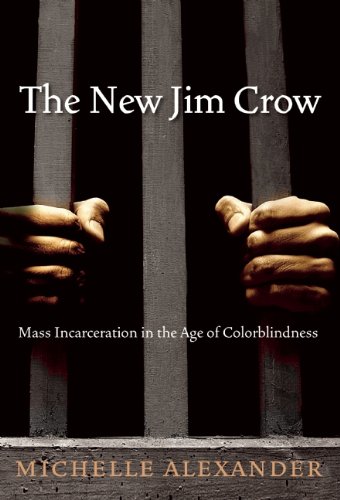
It’s becoming increasingly clear that we can no longer afford to imprison nearly 2 and a half million Americans, a disproportionate number of them black and Latino. The choice is clear: break the bank to continue to punish people for mostly nonviolent offenses, or figure out a new way to operate “criminal justice” that actually heals people rather than just putting them in cages.
If we continue down a neo-fascist path we will be unable to treat prisoners as human beings, and continue to drive a racial wedge into the heart of the nation. Obama must remember that he is Black and stop these Jim Crow shenanigans. [alex]
The New Jim Crow
How the War on Drugs Gave Birth to a Permanent American Undercaste
By Michelle Alexander
Originally published by TomDispatch.
Ever since Barack Obama lifted his right hand and took his oath of office, pledging to serve the United States as its 44th president, ordinary people and their leaders around the globe have been celebrating our nation’s “triumph over race.” Obama’s election has been touted as the final nail in the coffin of Jim Crow, the bookend placed on the history of racial caste in America.
Obama’s mere presence in the Oval Office is offered as proof that “the land of the free” has finally made good on its promise of equality. There’s an implicit yet undeniable message embedded in his appearance on the world stage: this is what freedom looks like; this is what democracy can do for you. If you are poor, marginalized, or relegated to an inferior caste, there is hope for you. Trust us. Trust our rules, laws, customs, and wars. You, too, can get to the promised land.
Perhaps greater lies have been told in the past century, but they can be counted on one hand. Racial caste is alive and well in America.
Most people don’t like it when I say this. It makes them angry. In the “era of colorblindness” there’s a nearly fanatical desire to cling to the myth that we as a nation have “moved beyond” race. Here are a few facts that run counter to that triumphant racial narrative:
*There are more African Americans under correctional control today — in prison or jail, on probation or parole — than were enslaved in 1850, a decade before the Civil War began.
*As of 2004, more African American men were disenfranchised (due to felon disenfranchisement laws) than in 1870, the year the Fifteenth Amendment was ratified, prohibiting laws that explicitly deny the right to vote on the basis of race.
* A black child born today is less likely to be raised by both parents than a black child born during slavery. The recent disintegration of the African American family is due in large part to the mass imprisonment of black fathers.
*If you take into account prisoners, a large majority of African American men in some urban areas have been labeled felons for life. (In the Chicago area, the figure is nearly 80%.) These men are part of a growing undercaste — not class, caste — permanently relegated, by law, to a second-class status. They can be denied the right to vote, automatically excluded from juries, and legally discriminated against in employment, housing, access to education, and public benefits, much as their grandparents and great-grandparents were during the Jim Crow era.
Excuses for the Lockdown Read the rest of this entry »
 One of the best documentary series ever produced, Eyes on the Prize is a 14-part study of the Civil Rights Movement in the United States. This series is so important because it shows how ordinary people, when organized, can affect dramatic social change.
The Civil Rights Movement remains the most inspiring example of successful social movements in the United States, breaking down the evil system of racial segregation and opening up possibilities for Black people, as well as for other races, that never existed before. It’s important to remember that 50 years ago, most African Americans could not vote, but now we have a Black President.
Obviously the work of the Civil Rights Movement remains unfinished, as we still live in a racist society with many other severe social problems caused by capitalism as well. But as Eyes on the Prize displays so dramatically, the hope we seek lies not in politicians but in our very own hands. We must learn from the past in order to change the future.
I watched episode 1 today and will be viewing the others over the next few weeks. Would you like to watch and discuss the series with me? Please respond by leaving a comment!
Love and struggle,
alex
p.s. anyone know how to embed these videos on WordPress?
Episode 1: Awakenings (1954-1956)
Subjects: Origins of the Civil Rights Movement, Segregation, Black Soldiers in World War II, Brown v. Board of Education, Emmett Till, Rosa Parks, Montgomery Bus Boycott, Martin Luther King Jr, White Citizens Council, Ku Klux Klan, White Allies
Episode 2: Fighting Back (1957-1962)
Subjects: NAACP, Integration v. Segregation, Little Rock AR, The Little Rock 9, James Meredith, University of Mississippi
Episode 3: Ain’t Scared of Your Jails (1960-1961)
Subjects: Student Sit-ins, Nashville TN, Direct Action, Civil Disobedience, Student Nonviolent Coordinating Committee (SNCC), Ella Baker, Boycott Movement, Congress of Racial Equality (CORE), Freedom Rides, Southern Jails
Episode 4: No Easy Walk (1961-1963)
Subjects: Martin Luther King Jr, Southern Christian Leadership Conference (SCLC), Freedom Songs, Albany GA, Bull Connor, Birmingham AL, Fire Hoses and Dogs, John Lewis, March on Washington, John F. Kennedy, Civil Rights Act
Episode 5: Mississippi: Is This America? (1962-1964)
Subjects: Medgar Evers, Murder of Goodman, Chaney, and Schwerner, SNCC, Voting Registration Drives, Mississippi Freedom Summer, Mississippi Freedom Democratic Party, Failure of the Democratic Party
[This is the BEST video in the series. What SNCC did in Mississippi changed America forever.]
Episode 6: Bridge to Freedom (1965) Read the rest of this entry »

Review also posted on The Rag Blog.
Review of Men’s Work: How to Stop the Violence That Tears Our Lives Apart
by Paul Kivel
Ballantine Books, 1992
Paul Kivel, cofounder of the Oakland Men’s Project, has given all men (and those concerned about them) a tremendous gift in the form of this inspirational book. This Valentine’s Day, let us accept this gift so that we might heal our relationships to the ones we love and to ourselves.
Men’s Work draws on Kivel’s decades of experience in the movement to end male violence, along with his life experiences as a father, son, partner, and friend, to speak about the trauma and feelings of powerlessness men experience to in our capitalist, patriarchal society. He describes how men reproduce this system by hurting women, trans folks, children, and themselves.
He explains that this is crisis cannot be solved by locking up male offenders, because this will only cause more violence and trauma. Instead, Kivel has devoted his life to helping men understand the roots of their behavior so that they might change, to become more caring and compassionate. One helpful way he approaches these roots is through the “Act Like a Man” box, which shows how patriarchal masculinity limits and hurts men:
men…………………………. men are…
yell at people………………. aggressive
have no emotions………… responsible
get good grades………….. mean
stand up for themselves… bullies
don’t cry……………………. tough
don’t make mistakes…….. angry
know about sex………….. successful
take care of people………. strong
don’t back down…………. in control
push people around…….. active
can take it………………… dominant over women
All men have received this male training, and know that when they step outside these boundaries they will face abuse, scorn, name-calling, accusations of homosexuality or femininity, or violence. The fear of this abuse is ultimately what keeps us inside the Box.
Paul relates, “It is not an irrational fear. This fear in me was built by getting beaten up after school by some older kid in the neighborhood who didn’t like me, by being teased and called names because sometimes I cried after I got beaten up. This fear was built by all the times my dad put me down because I wasn’t good enough in sports., at school, or whatever he decided was the standard that day.” Hearing a man brave enough to tell these kinds of stories was empowering and validated my own experiences.
The book also includes a wealth of activities that the Oakland Men’s Project developed to help men think about violence, masculinity, abuse and privilege, so that they might change their behavior. Read the rest of this entry »
This a review of the newish movie ‘Collapse’, review written by a woman of color named Erinn, which I saw on the Bring the Ruckus website. ‘Collapse’ apparently features Michael Ruppert talking about his apocalyptic visions for the world, filmed from his hideout bunker underground somewhere. Ruppert maintains a horrific blog and used to edit From the Wilderness, a conspiracy-oriented website that intermixes information about peak oil with 9/11 Truth stuff and other scary things.
I was glad to read Erinn’s review, even though I’m not planning to see this film, because it highlights both the racist/classist elements, as well as the lack of grounding in analysis about social change, that continues to hinder the peak oil “movement.”
What Ruppert, and other scaremongers like William Catton of Overshoot and Jay Hanson of dieoff.com have failed to comprehend is that peak oil and other ecological limits do not in themselves guarantee social disaster just because capitalism is collapsing. There are non-capitalist, non-fossil fuel-driven ways of organizing society, some of which would be much better, and some much worse.
Peak oil does present us with a stark dilemma, but like any dilemma we have two paths we can go down – of course there’s the path of continued plunder and violence, militarism and neo-fascism – but there’s also that of freedom, democracy, and sustainability. By hiding this second path from their readers and viewers, Ruppert and other ‘doomers’ inadvertently present compelling arguments for the first.
There’s still plenty of resources to meet everyone’s basic needs of food, shelter, water, etc. But because those in power have control over production, resources are being diverted to socially and ecologically inappropriate ends, like the military, banks, private jets, prisons, tar sands, etc. Never ever forget that there is always a fundamental political choice of how to allocate resources. Until the peak oil ‘movement’ catches on to this reality, it will continue to be dominated by scared, privileged white folks worried about a future catastrophe yet who don’t see the catastrophes that are already affecting most of the peoples of the world.
“We must rapidly begin the shift from a thing-oriented society to a person-oriented society. When machines and computers, profit motives and property rights, are considered more important than people, the giant triplets of racism, extreme materialism, and militarism are incapable of being conquered.” – Dr. Martin Luther King, Jr.
Happy MLK Day!
[alex knight]
by Erinn
So, I went to see a movie called “Collapse.” I read about this movie a little bit before seeing it (full disclosure: I get caught it weird Internet spaces and was reading an article about Mein Kampf. This movie was mentioned in the article for some reason). The premise of the movie is pretty simple: Michael Ruppert believes that he know how and why the US and global economies are currently collapsing (Get it? That’s the movie title…and the country…). The ticket was like $4, which in LA is pretty much like highway robbery.
Originally I went to see this film because it looked interesting and because of the whole $4 thing. About 30 minutes into the movie, I realized that there was a larger discussion to be had here that went beyond reviewing a film. There are aspects of this film that I found interesting and problematic from a practical political perspective, but I think that there is even a more interesting discussion here on the limitations of some supposedly “leftist” and “revolutionary” political ideologies and the complicated nature of the political moment that is in our near future.
So, just to summarize: The film really focuses on Ruppert and the Peak Oil Movement (which to be fair I know little about.) For those of you that are in the same boat as I am, the Peak Oil Movement refers to the idea/scientific principle that there is a limited amount of fossil fuels in the world. Ruppert looks at the fact that Saudi Arabia, which has the largest, recorded landed oil reserves, now drills for oil offshore. As offshore oil drilling is a much more costly endeavor than drilling for oil on land, this could be an indication that the oil in Saudi Arabia, and thus countries with even less oil, is on the global decline as a “dependable” resource. Ruppert identifies the fact that the economic system that the US and the rest of the world operates with requires “infinite resources” while depending on the “finite resource” of oil as the central paradox of our existence today. The movie goes on to note the limitations of other fuel possibilities (with the exception of solar and wind power, Mike identifies other fuel resources as economically and environmentally unfeasible) and declares that “revolution” (which isn’t ever defined in the film) will come from the anger people feel because of the fuel and food shortages that will plague the world in the upcoming decades.
Ruppert constructs a parable to help the audience understand his perspective. He describes the Titanic and himself as a boat-builder on the ship. He’s just been informed that the ship is going to sink and that there are not enough boats on the ship to save everyone on board the ship. (While telling this parable Ruppert seems to be ignoring the racial and gendered histories of this moment…aka white dudes locking poor and “colored” folks in the engine room of the ship.)
Ruppert says that as a boat-builder, he can select from a group of three sets of people to help: Read the rest of this entry »

Child soldiers in the Congo Civil War
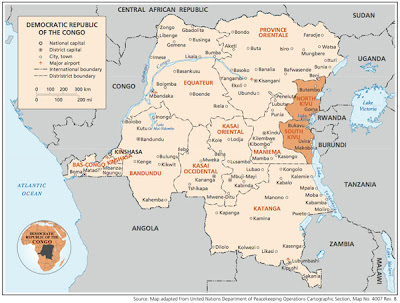
A civil war has been raging in the Democratic Republic of the Congo since.. well.. pretty much since the Belgians conquered the area, committed genocide, and called it a colony, as told in the excellent book King Leopold’s Ghost. But in the past 13 years, warfare has escalated and killed over 6 million Congolese, while rape has become an absolute epidemic and one of the main weapons of war. The UN’s top humanitarian official described the sexual violence against Congolese women as “almost unimaginable” for its frequency and ferocity.
This is a conflict that concerns us all, as it sheds crucial light on the functioning of global capitalism. At the center of the war is a mineral called coltan, short for Columbite-tantalite, which is used in capacitors, a necessary piece of electronics found in virtually every electronic device of modern capitalist society, from laptops to cell phones to cameras and jet engines. See Coltan: Learning the Basics. Coltan is just one of several expensive and rare minerals abundant in this remote region of central Africa, but coltan is ONLY available in this part of the world, which makes it extremely valuable.

Millions of children are exploited to mine coltan and other valuable minerals in the Congo
The DRC government, Uganda, Rwanda, and various militias and guerrilla forces are fighting over control of the land where these minerals are mined. The local residents, whose traditional lifestyles have been disrupted by decades of civil war, are forced to dig tiny amounts of these “conflict minerals” from the soil in inhuman conditions, often with their bare hands. An estimated 2 million of the miners are children, and often they are literal or virtual slaves who are on the brink of starvation. It is a situation which can only be described as hell on earth.
When you hear about such extreme exploitation, you can be pretty sure that some folks are making a hell of a lot of money. In this case, it’s western corporations like Nokia, Motorola, Compaq, Dell, IBM, Sony and many more who rely on extremely cheap capacitors in their electronics to make their profits from our Christmas presents. These companies have thus far avoided scrutiny by outsourcing the more direct business of extracting the minerals to smaller companies.
If there is any hope in this terrible situation, it is that capitalism is reaching the end of its ability to exploit the people of the world the way it has for the last centuries, and through the increased awareness of what is happening in places like the Congo, we as a people will say “Never again.” It is primarily the responsibility of those of us in the wealthy countries to put a stop to this paradigm of rape, slavery, and capitalist profit. Only we have the power to end the madness.
Below is a wonderful article that outlines specific solutions to the Congo civil war. [alex]
Conflict Minerals: A Cover For US Allies and Western Mining Interests?
Kambale Musavuli and Bodia Macharia
Originally published by Huffington Post, Dec. 14, 2009.
As global awareness grows around the Congo and the silence is finally being broken on the current and historic exploitation of Black people in the heart of Africa, myriad Western based “prescriptions” are being proffered. Most of these prescriptions are devoid of social, political, economic and historical context and are marked by remarkable omissions. The conflict mineral approach or efforts emanating from the United States and Europe are no exception to this symptomatic approach which serves more to perpetuate the root causes of Congo’s challenges than to resolve them.
The conflict mineral approach has an obsessive focus on the FDLR and other rebel groups while scant attention is paid to Uganda (which has an International Court of Justice ruling against it for looting and crimes against humanity in the Congo) and Rwanda (whose role in the perpetuation of the conflict and looting of Congo is well documented by UN reports and international arrest warrants for its top officials). Rwanda is the main transit point for illicit minerals coming from the Congo irrespective of the rebel group (FDLR, CNDP or others) transporting the minerals. According to Dow Jones, Rwanda’s mining sector output grew 20% in 2008 from the year earlier due to increased export volumes of tungsten, cassiterite and coltan, the country’s three leading minerals with which Rwanda is not well endowed. In fact, should Rwanda continue to pilfer Congo’s minerals, its annual mineral export revenues are expected to reach $200 million by 2010. Former Assistant Secretary of State for African Affairs Herman Cohen says it best when he notes “having controlled the Kivu provinces for 12 years, Rwanda will not relinquish access to resources that constitute a significant percentage of its gross national product.” As long as the West continues to give the Kagame regime carte blanche, the conflict and instability will endure. Read the rest of this entry »


 The End of Capitalism
Recent Comments