You are currently browsing the category archive for the ‘Winning’ category.
After two weeks of protests and “rebellion” in the streets of Oakland, CA, police have arrested Johannes Mehserle, the BART transit cop who shot and killed unarmed Oscar Grant on an Oakland train platform New Year’s Day. This is significant because this is perhaps the first time a California policeman has faced murder charges for killing someone while on duty.
Oscar Grant, the 22-year-old black man who was killed while lying flat on his stomach unarmed and restrained, has become a symbol for the racism and brutality that are endemic of police forces after his death was captured on video and circulated on Youtube.
This music video tribute by Jasiri X explains the story of Oscar Grant, but does contain somewhat graphic images of the shooting.
Follow the story at the website of Oakland activist Davey D, http://daveyd.com/
Here is a news article about the arrest.
http://hiphopnews.yuku.com/topic/1002
OAKLAND, Calif.
— Several well-placed sources are telling KTVU news that a warrant was issued for former BART officer Johannes Mehserle and that the officer is now in police custody.
Mehserle was the officer involved in the New Year’s Day fatal shooting of 22-year-old Oscar Grant on the platform of the Fruitvale BART station.
KTVU sources say Mehserle was some distance from the Bay Area when he was taken into custody and won’t arrive at the jail Tuesday night. Published reports indicate the BART police officer was arrested in Nevada. Read the rest of this entry »
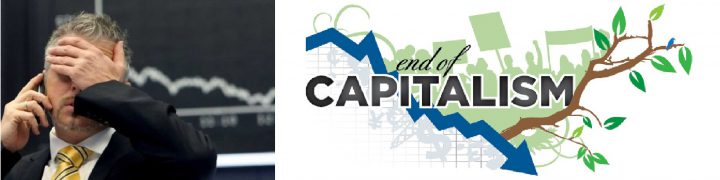
Two days before he published this article, David Graeber spoke at the People’s Forum in DC, which was organized by DC SDSers as part of Global Justice Action. The People’s Forum ran simultaneously while the G20 met in DC to save capitalism, because capitalism isn’t in crisis – capitalism is the crisis. The activities included a brainstorming session to explore “What Comes After Capitalism?” and a celebratory “Funeral for Capitalism” where the below pictures were taken. [alex]

At the "Funeral for Capitalism" - photo by Jake Cunningham
Hope in Common
David Graeber
Originally published by InterActivist Info Exchange, November 17, 2008.
We seem to have reached an impasse. Capitalism as we know it appears to be coming apart. But as financial institutions stagger and crumble, there is no obvious alternative. Organized resistance appears scattered and incoherent; the global justice movement a shadow of its former self. There is good reason to believe that, in a generation or so, capitalism will no longer exist: for the simple reason that it’s impossible to maintain an engine of perpetual growth forever on a finite planet. Faced with the prospect, the knee-jerk reaction—even of “progressives”—is, often, fear, to cling to capitalism because they simply can’t imagine an alternative that wouldn’t be even worse.
The first question we should be asking is: How did this happen? Is it normal for human beings to be unable to imagine what a better world would even be like?

photo by Christa H
Hopelessness isn’t natural. It needs to be produced. If we really want to understand this situation, we have to begin by understanding that the last thirty years have seen the construction of a vast bureaucratic apparatus for the creation and maintenance of hopelessness, a kind of giant machine that is designed, first and foremost, to destroy any sense of possible alternative futures. At root is a veritable obsession on the part of the rulers of the world with ensuring that social movements cannot be seen to grow, to flourish, to propose alternatives; that those who challenge existing power arrangements can never, under any circumstances, be perceived to win. To do so requires creating a vast apparatus of armies, prisons, police, various forms of private security firms and police and military intelligence apparatus, propaganda engines of every conceivable variety, most of which do not attack alternatives directly so much as they create a pervasive climate of fear, jingoistic conformity, and simple despair that renders any thought of changing the world seem an idle fantasy. Maintaining this apparatus seems even more important, to exponents of the “free market,” even than maintaining any sort of viable market economy. How else can one explain, for instance, what happened in the former Soviet Union, where one would have imagined the end of the Cold War would have led to the dismantling of the army and KGB and rebuilding the factories, but in fact what happened was precisely the other way around? This is just one extreme example of what has been happening everywhere. Economically, this apparatus is pure dead weight; all the guns, surveillance cameras, and propaganda engines are extraordinarily expensive and really produce nothing, and as a result, it’s dragging the entire capitalist system down with it, and possibly, the earth itself.

photo by Christa H
The spirals of financialization and endless string of economic bubbles we’ve been experience are a direct result of this apparatus. It’s no coincidence that the United States has become both the world’s major military (”security”) power and the major promoter of bogus securities. This apparatus exists to shred and pulverize the human imagination, to destroy any possibility of envisioning alternative futures. As a result, the only thing left to imagine is more and more money, and debt spirals entirely out of control. What is debt, after all, but imaginary money whose value can only be realized in the future: future profits, the proceeds of the exploitation of workers not yet born. Read the rest of this entry »
Second in the holiday movie series, The Take journals the Argentinian workers who seized their factories after the economy collapsed in 2001, and the corporations fled the scene. The parallels between Argentina 2001 and the United States 2008 are incredible, first the financial system collapsed, and now in Chicago we see the workers occupying a factory their bosses tried to illegally close. Hopefully next we’ll see the delegitimization of the government and mass popular uprisings against capitalism.
(This is just the first segment of the movie, make sure to click the Up-Arrow button to watch the rest! And you might need to do some Spanish-to-English translating!)
Below is an email circulating the SDS listservs that I’m reposting (I’m not the author). Workers, mostly Latin@s, have seized their workplace from management who was trying to take away their jobs and severance pay. Hopefully this is just the beginning of increased militance and organization by the working class as economic conditions in this country deteriorate and the contradictions – of bosses and banks being bailed out while we lose our jobs – become more glaring and visible.
Here is a news article about the takeover. [alex]
Chicago factory occupied
Lee Sustar reports from Chicago on an occupation by workers who want what’s theirs from management and the Bank of America.
December 6, 2008
WORKERS OCCUPYING the Republic Windows & Doors factory slated for closure are vowing to remain in the Chicago plant until they win the $1.5 million in severance and vacation pay owed them by management.
In a tactic rarely used in the U.S. since the labor struggles of the 1930s, the
workers, members of United Electrical, Radio and Machine Workers of America (UE) Local 1110, refused to leave the plant on December 5, its last scheduled day of operation.
“We decided to do it because this is money that belongs to us,” said Maria
Roman, who’s worked at the plant for eight years. “These are our rights.”
Word of the occupation spread quickly both among labor and immigrant rights activists–the overwhelming majority of the workers are Latinos. Seven local TV news stations showed up to do interviews and live reports, and a steady stream of activists arrived to bring donations of food and money and to plan solidarity actions.
Management claims that it can’t continue operations because its main creditor, Bank of America (BoA), refuses to make any more loans to the company. After workers picketed BoA headquarters December 3, bank officials agreed to sit down with Republic management and UE to discuss the matter at a December 5 meeting arranged by U.S. Rep. Luis Gutierrez (D-Ill), said UE organizer Leah Fried.
BoA had said that it couldn’t discuss the matter with the union directly without written approval from Republic’s management. But Republic representatives failed to show up at the meeting, and plant managers prepared to close the doors for good–violating the federal WARN Act that requires 60 days notice of a plant closure.
The workers decided this couldn’t go unchallenged. “The company and Bank of America are throwing the ball to one another, and we’re in the middle,” said Vicente Rangel, a shop steward and former vice president of Local 1110.
Many workers had suspected the company was planning to go out of business–and perhaps restart operations elsewhere. Several said managers had removed both production and office equipment in recent days.
Furthermore, while inventory records indicated there were plenty of parts in the plant, workers on the production line found shortages. And the order books, while certainly down from the peak years of the housing boom, didn’t square with management’s claims of a total collapse. “Where did all those windows go?” one worker asked.
Workers were especially outraged that Bank of America, which recently received a bailout in taxpayer money, won’t provide credit to Republic. “They get $25 billion from the government, and won’t loan a few million to this company so workers can keep their jobs?” said Ricardo Caceres, who has worked at the plant for six years. Read the rest of this entry »
[Following on the heels of another majority victory with Burger King, the Coalition of Immokalee Workers (CIW), and their student allies in the Student-Farmworker Alliance (SFA) have succeeded in pressuring Subway to pay an extra 1 cent per pound for their tomatoes so that workers who pick those tomatoes will get a fair wage. CIW/SFA have also reached similar agreements with McDonalds and Taco Bell, which means all the major fast food industry titans have now given in! This is another great example of the power of democratic social movements to achieve change. – alex]
Originally published by the Coalition of Immokalee Workers’ website.

Miami, FL, 12/2/08: Gerardo Reyes (seated, right) of the Coalition of Immokalee Workers and Jan Risi (also seated), President and CEO of Subway’s Miami-based purchasing arm, the Independent Purchasing Cooperative, commemorate the signing of the CIW’s newest agreement with a fast-food industry leader to improve wages and working conditions in Florida’s tomato fields.
SUBWAY SIGNS!…
December 2, 2008: Subway, the third largest fast-food chain in the world and the biggest fast-food buyer of Florida tomatoes, reached an agreement today with the CIW to help improve wages and working conditions for the workers who pick their tomatoes!
What they’re saying about the Subway agreement:
- “This agreement between Subway and the Coalition of Immokalee Workers is yet another blow to the scourge of slavery that continues to exist in the tomato fields of Florida,” Senator Bernie Sanders said in a statement. “Subway is to be congratulated for moving to ensure that none of its products are harvested by slave or near-slave labor. Sadly, too many other companies continue to tolerate this travesty.”
- “Subway strongly supports the farmworkers’ rights and has entered in an agreement with the (Coalition of Immokalee Workers) to pay the additional 1 cent per pound for tomatoes grown in the Immokalee region of Florida,” Subway spokesman Les Winograd said.
- “Today, the fast-food industry has spoken with one voice,” said Gerardo Reyes of the CIW. “With this agreement, the four largest restaurant companies in the world have now joined their voices to the growing call for a more modern, more humane agricultural industry in Florida.” (read the joint press release in its entirety)
- But Sherri Daye Scott, who edits QSR, a North Carolina-based food-service industry magazine, noted consumers spoke first – by supporting the coalition’s petition drives, protests and boycotts.
“Until the college students and then the consumers got involved, it was not that big a deal,” Scott said.
Will fair food become an industry watchword?
“It could,” Scott said. “I haven’t heard any rumblings yet beyond the tomato pickers yet, but it could gain traction. Look at food safety – five, 10 years ago, you didn’t hear much about it; now it’s everywhere. The same thing could happen with transparency in the food supply chain.“
- “Subway’s agreement could yield as much money as all the other deals combined. That’s because Subway is the largest user of tomatoes and has 24,000 stores in the United States. Burger King’s agreement is expected to yield about $250,000 for workers, numbers relatively comparable to the Taco Bell and McDonald’s agreement.” (Miami Herald)
Meanwhile, the Northeast Fair Food Tour continues, spreading the news of the Subway agreement and meeting with allies to discuss plans for the road ahead in the Campaign for Fair Food, including a growing focus on the other leading buyers of Florida tomatoes, the supermarket and foodservice industries.
Click here for a revised list of planned public events on the tour
[This is a huge victory, Mountaintop Removal is a horrible destructive practice of coal mining in Appalachia that destroys communities and the environment. Organizers, including Rainforest Action Network and many members and chapters of Students for a Democratic Society (SDS), have been fighting this for a long time through creative nonviolent actions and pressure, and today we can celebrate a major victory as Bank of America caves to our demands! – alex]
From Bank of America’s website:
“Bank of America is particularly concerned about surface mining conducted through mountain top removal in locations such as central Appalachia. We therefore will phase out financing of companies whose predominant method of extracting coal is through mountain top removal. While we acknowledge that surface mining is economically efficient and creates jobs, it can be conducted in a way that minimizes environmental impacts in certain geographies.”
We are thrilled that just two and a half weeks after RAN’s day of action against coal and coal finance, Bank of America has made a public commitment to stop financing the devastating practice of mountaintop removal mining. This has been a major demand of the banks for the Global Finance campaign and we applaud Bank of America as it takes a step in the right direction – a step away from coal. Congratulations to everyone who has helped to pressure Bank of America to end it’s financing of coal and mountaintop removal – this is a truly incredible grassroots victory!
We will have more information about Bank of America’s announcement soon, as we work with our team and our allies to respond. For now, let’s celebrate!
Originally posted by Annie on Rainforest Action Network’s website.
 “Defying Dixie: The Radical Roots of Civil Rights (1919-1950)”
by Glenda Gilmore
2008 W.W. Norton
I picked up this book randomly when I saw it in the library, and it turned out to be a worthwhile read. Gilmore, a white female professor from North Carolina, surveys the “radical roots of civil rights” through the efforts of the Communist Party in the South during the 1920s through 1940s.
Gilmore tells the story by focusing on a few individual black radicals who have been forgotten by history, especially Lovett Fort-Whiteman and Pauli Murray.
Whiteman, an extravagant early supporter of the Soviet Union, founded some of the first communist organizations for African Americans, before being scared out of the country by the feds, becoming a darling in the Soviet Union, then ultimately winding up in one of Stalin’s gulags in Siberia, where he worked/starved to death.
Murray had more luck, despite being a transgendered black woman in the South in the 1940s. With a bold attitude, she attempted to integrate various institutions, like the University of North Carolina Law program, and although she herself was not successful in these efforts, her example paved the way for future victories within the Black Freedom Movement.
We also learn quite a bit about Langston Hughes, Thurgood Marshall, A. Philip Randolph, Max Yergan, and many other heroic characters who fought early and often for equality in the apartheid South.
More interesting to me though was what I learned about movement strategy, for example we explore how the first integrated unions in the South scared the bejesus out of the capitalists, or what it meant for the Communist Party to bring the country’s attention to the case of the Scottsboro “Boys”, or how the “Popular Front” strategy of allying with liberals succeeded, and failed.
The writing is interesting, but could be more purposeful. Defying Dixie focuses probably too much on the Communists, and not on other radicals, but still this book really clarified for me important stuff like the Depression, the South in the 1930s, and the early Civil Rights Movement, and how once-radical ideas like social equality of the races is now accepted fact (even though still not fully realized).
Today the U.S. House of Representatives voted DOWN Bush’s $700 billion Bailout for Wall St. by 205-228. Surprisingly, the bill was killed by Congressional Republicans, 2/3 of whom voted AGAINST the bailout, while a majority of Democrats supported it. Public outrage of Wall Street’s massive robbery attempt must be running so high that constituents in those red states are rediscovering their Populist roots. This is a major victory for the grassroots. Over the past week there have been many hundreds of protests around the country against the bailout.
Meanwhile, this news helped trigger the Dow Jones’ largest plummet in history, as the industrial markets fell by almost 780 points. The Nasdaq also fell by over 9%.
All of this was preceded by the news that Wachovia stocks had fallen by 80% and the giant bank would be bought out by Citigroup, as the financial industry moved one big step closer towards private monopoly.
Under the shadow of the bailout, a similarly-sized and similarly-horrible bill was passed last week in the US Senate by a vote of 78-12, after passing the House by 370-58. This was a $634 billion spending bill that included such utter garbage as eliminating the 26-year offshore drilling ban, more money for the perennial energy-waster of shale oil in the West, a very regressive $25 billion bailout for the auto industry, and the largest-ever Pentagon budget of half a trillion dollars.
This is just the latest in a series of events that seem to indicate a move towards fascism in the US by financial and political elites. Italian dictator Benito Mussolini, founder of the fascist model, famously declared that “Fascism should more properly be called corporatism because it is the merger of state and corporate power.” Following in his footsteps, the fascists of today apparently aim to handover complete control of the government to private corporations and financial interests, by cracking down on dissent and civil liberties, cutting all social programs, stirring up racism to divide the public, and putting the country on a permanent war footing. This will all be much easier to accomplish once the banking industry has been allowed to pillage the US Treasury and put the entire country in debt to Wall St.
Today’s victory over the bailout plan will not be permanent if Bush and the Democratic Leadership have the last word. Also, it should be clear that both McCain and Obama are firmly in support of giving this humongous sum of taxpayer dollars over to the world’s largest and richest companies, all rhetoric of “protecting Main St.” aside.
Their real opposition as always will be ‘we, the people’, who are fed up with Washington’s crooked deals with Wall St. As we did this past week, we must continue to send in thousands upon thousands of letters and emails and phone calls, and organize hundreds of protests until this absurd bailout plan is dropped or completely transformed into a bailout for those losing homes, health care, access to education, and jobs, the real victims of the economic downturn.
Our hope is that despite those at the top seeking to entrench their power, the failure of the capitalist system will open up a window of opportunity for all those of us who believe in justice, freedom and democracy to create a new world. Today, we say “Enough!”


 The End of Capitalism
Recent Comments