
You are currently browsing the category archive for the ‘Consumerism’ category.
We’re almost four years into the 20s and the sooner we bring back the concept of decades the better. Decades give people, especially young people, a temporal identity and a grounding in history. Decades emphasize the importance of now, but also connect us to the past in a way that doesn’t alienate us from our elders or youths in the way the concept of “generations” does automatically. Decades are a key element of narrative storytelling, encourage critical thinking through comparing/contrasting eras, and make it easier to discuss the future. In sum, decades benefit mental health, social inclusion and connection, movement building, and resistance to the aimless void of late capitalism. Our ability to exercise historical agency and preserve historical memory may depend on us reviving this concept.
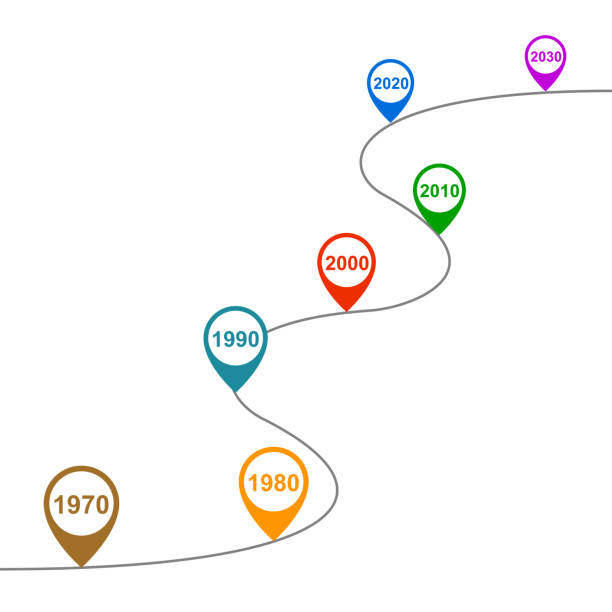
If you’re 35 or older, you remember the 60s, 70s, 80s, and 90s as regular talking points. Both in the historical sense of “what was the spirit of the 60s?” and in the future-focused sense of “this will be THE trend of the 90s.” The concept of decades permeated regular conversation, tying people together and rooting them in a temporal home, whether you were talking about music, sports, film, fashion, politics, games, or literally anything. It made it natural and popular to compare eras of things, which is a basic building block of both historical study as well as critical thinking itself. It also helped people form an identity, in the sense of “I’m a child of the 70s” – one shorthand reference point that contains a vast easily-recalled cultural context filled with people, events, products, art, styles, and social struggles. It was a source of pride to be associated with a decade.
When Y2K hit, the computers were just fine. Better than ever, in fact. But we weren’t, because we suddenly lost a very powerful tool for understanding our social environment. Without the concept of decades, we wandered into an amorphous fog without beginning or end, where we became easy-pickings for a consumer capitalism that thrives by developing isolated, disoriented worker-spectators. When ignorant of our past and uninterested in our future, we rarely make trouble for the ruling class.
At first, some people resisted the change. They coined names for the decade-to-be, but none caught on. They sounded forced, so they were relegated to the realm of jokes (Try to have a serious conversation about “the noughties”). Nothing stepped in to bridge the chasm.
It wasn’t a huge problem at first, because the 90s were such a recent frame of reference, so we could keep the concept of decades alive by just filing the present under “post-90s” or “this decade.” All the conversations we were accustomed to, where we compared trends in pants, or hair, or anarchist politics, kept rolling for a while, they just had this weird stand-in where you’d have to compare previous decades to the vague concept of “now.” As in, “you guys had VCRs in the 80s, but now we have the far-superior technology of DVD players, which will remain popular forever.”
Ten years passed. A new decade was scheduled to be starting, but no one took notice. The concept of decades wasn’t revived. Instead, it faded into oblivion. Maybe we were too buried under the infinite scroll of social media, our heads down, absorbed by our smartphones, or too obsessed by the latest streaming content, that we lost the ability to form long-range narratives. Our shared experience of the era itself began to fracture, as our attention scattered into increasingly fragmented niches of the spectacle, which concealed the fact that we were largely all doing the same thing at the same time. Or maybe we were so emotionally beaten down by the seemingly endless “War on Terror” and apocalyptic ecological catastrophe that we simply didn’t have the energy to think of ourselves as historical agents, and therefore couldn’t be bothered with putting a name on the era we were living through, even though “the teens” was an obvious and pleasant choice.
It’s not as if there weren’t massive and historically-important movements for social change happening in that decade. From the Arab Spring to Occupy Wall Street to Black Lives Matter to MeToo to Transgender visibility, millions of people were organizing, shifting social norms, and becoming empowered to radically improve society in ways perhaps more profound than we know. But compared to movements of the 60s, 70s, 80s, or 90s, these new movements are unusually obscured, and perhaps in danger of being overlooked.
Organizers of these world-changing efforts – people like Alicia Garza and Marisa Holmes – should be recognized and remembered for their actions. Even more importantly, our understanding of how that decade’s movements arose, why they were so effective, and also what their shortcomings were, should be the topic of regular conversation so that we may improve upon them in the future. Yet, it’s nearly impossible to have a productive, civil version of such a discussion on social media, and it may be nearly impossible for a social movement in this day and age to outlast the ephemeral confines of a hashtag.
This is not to suggest that these movements will be forgotten, or to downplay the excellent work of the chroniclers of these efforts, who have produced worthwhile books, documentaries, and other media that actively preserve this historical memory. Instead, I suggest it is unfair to those culture-defining social movements that we can’t immediately recall their powerful messages, images, and actors through a universally-agreed-upon phrase like “the teens” in the same way that “the 60s” immediately conjures such thoughts of the Civil Rights Movement or the anti-Vietnam War movement.
By the way, don’t give me this crap about “generations.” The Civil Rights Movement/Black Freedom Struggle was driven forward by people of all ages, from elders like A. Philip Randolph to middle-aged people like Ella Baker, to children like those who walked out of school to pack the Birmingham jails. As far as I’m aware, the fear-mongering associated with “rebellious youth” has always existed. For sure it existed in the 60s, when the mass media did their best to demonize the anti-authoritarian, hopelessly “feminized” “Baby Boomers”, effectively blaming young people for everything wrong with the world. We’ve come full circle today, blaming those same people, who are now old, for the exact opposite reasons.
“Generations” are a fake conceptual tool used to divide people. Since 2000, as the concept of decades has fallen away, in part it has been superseded by the nefarious concepts of “Millennials” and “Gen. Z.” These are identities which are inherently exclusive, and usually they are invoked for purely negative characterizations. Eventually, “Gen. Z” will get the same scorn that “Boomers” do now, and it will be just as baseless.
In contrast, decades are inherently inclusive. Everyone who was alive in the 90s can reminisce about what that decade was like for them. Even if our experiences were vastly different, we can find common ground through cultural touchstones like The Simpsons or Tupac. That kind of conversation is not just idle nostalgia. It is a collective remembering that allows us to form social bonds with neighbors, co-workers, and fellow activists, to each of whom the 90s is a small building block in their own identity-formation.
If you read comments on Youtube under videos of old music or TV shows (and I’m not recommending you do), you’ll regularly see people lamenting that we no longer live in the [insert decade here]. Some of those commenters are old and feeling nostalgic for the loss of their youth. That’s normal. But some of those commenters are young. They will often mention that they “just turned 16” (or another age of fragile identity-formation). And yet, here they are, wandering the interwebs, watching videos that were produced before they were born and wishing they could time-travel back to the 20th century.
Meanwhile, the 21st century is nearly a quarter complete, and its music and TV shows have been equally valuable, if not more so. But without the decades providing an automatic frame of reference for great artistic works, we struggle to recall exactly when they were released, or how they related to concurrent events in society or technology, or even our own lives. Without decades, people don’t know how to talk to each other about their own time period. And so they don’t. They just slowly forget, as everything is enveloped in a nebulous, meaningless haze.
What stories are children of this century learning about their own time, and where they fit in? What can they be proud of? What can they look forward to?
There’s a bunch of things we could do for a better future for all. Redistributing the wealth of the top 1%. Replacing the private automobile with free public transit. Dismantling the prison-industrial complex in favor of systems of transformative justice and accountability. Planting a billion trees. Those will take a lot of hard work and a long time.
One thing that would take very little effort, would bring us into connection with those around us of all ages, would help us cherish the present and look forward to the future, would empower us to find meaning and feel better, is to reintroduce the concept of decades. We can start now, by acknowledging publicly, and habitually, that we live in the 20s.*
* I mean no disrespect to the decade of the 1920s, a fine decade to study and discuss. But of the decades called “the 20s”, the current decade is far more relevant to everyone living today and for the rest of the 21st century. I don’t know at what point people stopped referring to the 1820s as “the 20s,” but surely it was before 1923.
The following essay was written for and performed at a spoken word event on Nov. 15 in Philadelphia. Enjoy! [alex]
“A specter is haunting Europe; the specter of zombie-ism.” – Zombie Karl Marx

Art by guitarbri. Still from the film “They Live.”
Why has the archetype of the zombie been so ever-present in pop culture over the last five years or so? Is it just a passing fad, like Justin Bieber’s latest hairstyle or the eye-rolling annoyance of YOLO? Is it simply because it’s so much fun to dress up in tattered rags, skin covered with fake blood and oozing sores? Or could this zombie fixation reflect something buried in our subconscious about the society we live in today? Something about our ideas about ourselves, minds turned off and eyes glued to flickering screens, fatalistically attempting to forge human relationships through virtual social networks, working meaningless jobs to pay inescapable debts, groaning towards a future that promises no better than what already exists, and at worse may offer apocalyptic disaster, a remix of Fukushima and Hurricane Sandy set on repeat?
But beyond detachment and doom, could our obsession with the undead reflect the reality of the state of institutional decay, political futility, and economic stagnation the world as a whole is struggling to wade through, like some pungent swamp that won’t release its brambles from our ankles?
I submit that the answer is all that and more. I believe we are, in fact, living through a historic period tied to the image of the zombie because the system which dictates and dominates our globe, from the world-markets to the workplace to the propaganda machines, and I do not hesitate to name it – capitalism, has in fact zombified right before our eyes, transforming into a monster that threatens to tear all of our lives apart, unless we can find some way to annihilate the sucker, or at the very least evade it until its virus extinguishes itself in an orgy of self-destruction.
And yes, this is a hopeful theory, more hopeful than almost anything else a left-wing radical like myself is likely to propose to you in this day and age. In this age of grimness and despair, scheduled to climax in about a month, any hope for a better future may sound like the naïve ramblings of a starry-eyed child who’s watched too many Disney movies. Nevertheless, hear me out, I have a point.
Definitions
Zombies
 In 2009, the radical UK magazine Turbulence published an excellent editorial called “Life in Limbo?”, which courageously declared that neoliberalism, the dominant ideological and political project of the capitalist elites over the last forty years, had failed and been replaced by what they called “Zombie-Liberalism”: Read the rest of this entry »
Learning about the exploitation of the factory workers of China is important not only because, as Johann Hari describes, their brutish toil produces most of our cheap consumer goods in the West. As I argued in my recent interview (Part 2B: Social Limits and the Crisis), we have an even more important connection to these Chinese workers – the hope that their liberation offers the possibility of our own.
Organizing outside the Chinese Communist Party’s official union, workers have initiated a series of crippling strikes that repeatedly shut down factories, among other forms of rebellion. They are openly defying the totalitarian state-capitalist government of China, as well as the Western corporations whose factories they are closing. And they are winning. Wages are being increased by 40, 60, even 100% at some plants.
If the Chinese workers’ movement continues to disrupt the sweatshops pumping out our electronics and car parts, they could throw a wrench into the China->U.S. cheap goods conveyor belt that has carried global capitalist growth for more than a decade. The destruction of this global trade alliance will not only free the Chinese workers from the abominable conditions Hari describes, but potentially free the entire planet from an economic system hell-bent on relentless growth and plunder.

image from The Economist
In short, capitalism relies on China’s absurdly cheap labor for its profit margins. This unsanctioned frenzy of Chinese labor organizing is striking a blow in the heart of the system. More power to ’em! We should support these workers however possible. [alex]
And the Most Inspiring Good News Story of the Year is…
by Johann Hari, August 6, 2010
At first, this isn’t going to sound like a good news story, never mind one of the most inspiring stories in the world today. But trust me: it is.
Yan Li spent his life tweaking tiny bolts, on a production line, for the gadgets that make our lives zing and bling. He might have pushed a crucial component of the laptop I am writing this article on, or the mobile phone that will interrupt your reading of it. He was a typical 27-year old worker at the gigantic Foxconn factory in Shenzen, Southern China, which manufactures i-Pads and Playstations and mobile phone batteries.
Li was known to the company by his ID number: F3839667. He stood at a whirring line all day, every day, making the same tiny mechanical motion with his wrist, for 20 pence an hour. According to his family, sometimes his shifts lasted for 24 hours; sometimes they stretched to 35. If he had tried to form a free trade union to change these practices, he would have been imprisoned for twelve years. On the night of May 27th, after yet another marathon-shift, Li dropped dead.
Deaths from overwork are so common in Chinese factories they have a word for it: guolaosi. China Daily estimates 600,000 people are killed this way every year, mostly making goods for us. Li had never experienced any health problems, his family says, until he started this work schedule; Foxconn say he died of asthma and his death had nothing to do with them. The night Li died, yet another Foxconn worker committed suicide – the tenth this year.
For two decades now, you and I have shopped until Chinese workers dropped. Business has bragged about the joys of the China Price. They have been less keen for us to see the Human Price. KYE Systems Corp run a typical factory in Donguan in southern mainland China, and one of their biggest clients is Microsoft – so in 2009 the US National Labour Committee sent Chinese investigators undercover there. On the first day a teenage worker whispered to them: “We are like prisoners here.”
The staff work and live in giant factory-cities that they almost never leave. Each room sleeps ten workers, and each dorm houses 5000. There are no showers; they are given a sponge to clean themselves with. A typical shift begins at 7.45am and ends at 10.55pm. Workers must report to their stations fifteen minutes ahead of schedule for a military-style drill: “Everybody, attention! Face left! Face right!” Once they begin, they are strictly forbidden from talking, listening to music, or going to the toilet. Anybody who breaks this rule is screamed at and made to clean the toilets as punishment. Then it’s back to the dorm.
It’s the human equivalent to battery farming. Read the rest of this entry »

Child soldiers in the Congo Civil War
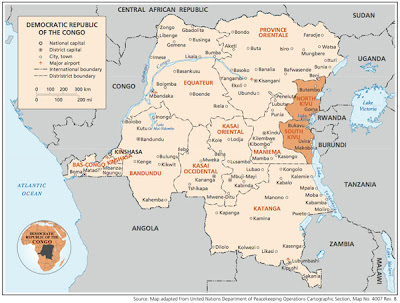
A civil war has been raging in the Democratic Republic of the Congo since.. well.. pretty much since the Belgians conquered the area, committed genocide, and called it a colony, as told in the excellent book King Leopold’s Ghost. But in the past 13 years, warfare has escalated and killed over 6 million Congolese, while rape has become an absolute epidemic and one of the main weapons of war. The UN’s top humanitarian official described the sexual violence against Congolese women as “almost unimaginable” for its frequency and ferocity.
This is a conflict that concerns us all, as it sheds crucial light on the functioning of global capitalism. At the center of the war is a mineral called coltan, short for Columbite-tantalite, which is used in capacitors, a necessary piece of electronics found in virtually every electronic device of modern capitalist society, from laptops to cell phones to cameras and jet engines. See Coltan: Learning the Basics. Coltan is just one of several expensive and rare minerals abundant in this remote region of central Africa, but coltan is ONLY available in this part of the world, which makes it extremely valuable.

Millions of children are exploited to mine coltan and other valuable minerals in the Congo
The DRC government, Uganda, Rwanda, and various militias and guerrilla forces are fighting over control of the land where these minerals are mined. The local residents, whose traditional lifestyles have been disrupted by decades of civil war, are forced to dig tiny amounts of these “conflict minerals” from the soil in inhuman conditions, often with their bare hands. An estimated 2 million of the miners are children, and often they are literal or virtual slaves who are on the brink of starvation. It is a situation which can only be described as hell on earth.
When you hear about such extreme exploitation, you can be pretty sure that some folks are making a hell of a lot of money. In this case, it’s western corporations like Nokia, Motorola, Compaq, Dell, IBM, Sony and many more who rely on extremely cheap capacitors in their electronics to make their profits from our Christmas presents. These companies have thus far avoided scrutiny by outsourcing the more direct business of extracting the minerals to smaller companies.
If there is any hope in this terrible situation, it is that capitalism is reaching the end of its ability to exploit the people of the world the way it has for the last centuries, and through the increased awareness of what is happening in places like the Congo, we as a people will say “Never again.” It is primarily the responsibility of those of us in the wealthy countries to put a stop to this paradigm of rape, slavery, and capitalist profit. Only we have the power to end the madness.
Below is a wonderful article that outlines specific solutions to the Congo civil war. [alex]
Conflict Minerals: A Cover For US Allies and Western Mining Interests?
Kambale Musavuli and Bodia Macharia
Originally published by Huffington Post, Dec. 14, 2009.
As global awareness grows around the Congo and the silence is finally being broken on the current and historic exploitation of Black people in the heart of Africa, myriad Western based “prescriptions” are being proffered. Most of these prescriptions are devoid of social, political, economic and historical context and are marked by remarkable omissions. The conflict mineral approach or efforts emanating from the United States and Europe are no exception to this symptomatic approach which serves more to perpetuate the root causes of Congo’s challenges than to resolve them.
The conflict mineral approach has an obsessive focus on the FDLR and other rebel groups while scant attention is paid to Uganda (which has an International Court of Justice ruling against it for looting and crimes against humanity in the Congo) and Rwanda (whose role in the perpetuation of the conflict and looting of Congo is well documented by UN reports and international arrest warrants for its top officials). Rwanda is the main transit point for illicit minerals coming from the Congo irrespective of the rebel group (FDLR, CNDP or others) transporting the minerals. According to Dow Jones, Rwanda’s mining sector output grew 20% in 2008 from the year earlier due to increased export volumes of tungsten, cassiterite and coltan, the country’s three leading minerals with which Rwanda is not well endowed. In fact, should Rwanda continue to pilfer Congo’s minerals, its annual mineral export revenues are expected to reach $200 million by 2010. Former Assistant Secretary of State for African Affairs Herman Cohen says it best when he notes “having controlled the Kivu provinces for 12 years, Rwanda will not relinquish access to resources that constitute a significant percentage of its gross national product.” As long as the West continues to give the Kagame regime carte blanche, the conflict and instability will endure. Read the rest of this entry »
 http://www.democracynow.org/2009/12/17/bolivian_president_evo_morales_on_climate
AMY GOODMAN: Just before we went to air today, I interviewed Evo Morales, Bolivia’s first indigenous president. He was re-elected in a landslide victory earlier this month. On Wednesday, Evo Morales called on world leaders to hold temperature increases over the next century to just one degree Celsius, the most ambitious proposal so far by any head of state. Morales also called on the United States and other wealthy nations to pay an ecological debt to Bolivia and other developing nations.
AMY GOODMAN: President Morales, welcome to Democracy Now!
PRESIDENT EVO MORALES: [translated] Thank you very much for the invitation.
AMY GOODMAN: You spoke yesterday here at the Bella Center and said we cannot end global warming without ending capitalism. What did you mean?
PRESIDENT EVO MORALES: [translated] Capitalism is the worst enemy of humanity. Capitalism—and I’m speaking about irrational development—policies of unlimited industrialization are what destroys the environment. And that irrational industrialization is capitalism. So as long as we don’t review or revise those policies, it’s impossible to attend to humanity and life.
AMY GOODMAN: How would you do that? How would you end capitalism?
PRESIDENT EVO MORALES: [translated] It’s changing economic policies, ending luxury, consumerism. It’s ending the struggle to—or this searching for living better. Living better is to exploit human beings. It’s plundering natural resources. It’s egoism and individualism. Therefore, in those promises of capitalism, there is no solidarity or complementarity. There’s no reciprocity. So that’s why we’re trying to think about other ways of living lives and living well, not living better. Not living better. Living better is always at someone else’s expense. Living better is at the expense of destroying the environment.
AMY GOODMAN: President Morales, what are you calling here—for here at the UN climate summit?
PRESIDENT EVO MORALES: [translated] Defense of the rights of Mother Earth. Read the rest of this entry »
This is a great, short video that shows why “Cap and Trade” schemes to reduce carbon emissions, like what world leaders are discussing at the Copenhagen Summit, are fundamentally flawed. Turns out that selling our atmosphere to corporations might actually be a bad way to stop climate change. It’s just another attempt to bail out capitalism, this time by making a commodity out of our hopes for a sustainable future.
Annie Leonard, creator of the original “Story of Stuff,” has hit another one out of the park by breaking down complex political issues into simple, accessible and visually appealing viral videos. Check it out (And share with family and friends)! [alex]
And here is the original, highly-acclaimed “Story of Stuff”
see more at storyofstuff.com
An excellent talk on the relation between mental health and capitalism/neoliberalism. This is worth watching all the way through if you can. Dr. Stephen Bezruchka discusses the pharmaceutical/psychiatric industry and the spiraling rates of anti-depressants and other drugs given out to adults and children. This medicating of America doesn’t seem to be curbing mental illness or mental disorders, which are more prevalent in the US today than ever before, or in any other countries.
He suggests a more “caring and sharing” society, focused especially on better childhood development and reducing the gap between rich and poor, would do much to help us heal our over-stressed and depressed nation. This is a great line of thought, as understanding psychological disorder within the context of political decision-making allows us to imagine strategies to overcome it. Human-made problems have human solutions.
[The tremendous waste and planned destruction that is inherent to capitalism is really quite astounding, but acknowledging this opens a great doorway for all those concerned about social justice and protecting the environment. Rational production, organized by society rather than for profit, would allow a great reduction in environmental damage, without sacrificing social welfare. In fact, as Don Fitz points out, economic production scaled to meet human and ecological needs would be so much more efficient than capitalist production that we could produce far less, while simultaneously increasing quality of life dramatically.
This brief overview of the military, food, health care, etc. industries suggests ways to completely transform and down-scale the economy, which would actually make us all richer. Worth the read! -alex]
We Can Produce Less and Consume More
by Don Fitz
Originally published by ZNet, July 15, 2009.
A major gulf between environmental and social justice activists is “stuff.” Environmentalists (or at least serious ones) say “less.” Social justice organizers have the habit of saying “more.”
This divisive question cuts to the edge of the sort of society we want to build. Deep greens envision a world with much less stuff. A great outline is Annie Leonard’s The Story of Stuff. [1] An excess of human-produced objects destroys species habitat, poisons communities with toxins, depletes oil and intensifies climate change.
Social justice activists, however, have devoted centuries to denouncing capitalism as placing fetters on the expansion of production. Whether the struggle is against racism, for labor rights, or resistance to imperialism, the cry is for the oppressed to have a much bigger piece of the pie.
In response to the current economic crisis, a near-unanimous chorus sings “There must be a stimulus package.” There is considerable debate over the size of the stimulus and what should be stimulated but not a whimper asking whether growth is really a good idea. It is a rare Michael Moore suggesting that auto plants should not produce autos, but rather solar panels and windmills for a society without privately owned cars. [2] It is even more rare to hear suggestions that auto plants should manufacture less and that unemployment could be resolved by shortening the work week.
A shorter work week is not exactly of the top of most environmental agendas. In fact, environmentalists often shoot themselves in the foot when they call for “sacrifices” from those who have already done more than their fair share of doing without.
Production and consumption: A broken connection
These conceptual problems stem from progressives using corporate economic frameworks. The error is believing that there is a connection between the amount of production and the amount of consumption. The common misperception is that an increase in consumption requires increased production, and, conversely, a fall in production means there will be less available to consume.
Accepting corporate economics, environmentalists make the false conclusion that if CO2 levels are to drop, then people must consume less. Social justice activists mistakenly believe that putting people back to work and providing basic necessities for all requires an increase in production. Neither of these are true. The greatest decrease in CO2 levels would come with a change in production and requires no personal sacrifice. Increasing production would not guarantee enough jobs; but, changing production could.
The mistake in economic thinking is hardly surprising since there was a direct link between production and consumption during more than 99% of human history. In pre-capitalist societies, if people wanted more, they produced more of what they wanted. This characterized the first few centuries of capitalism.
But between WWI and WWII, something happened that could only be considered a problem within the capitalist mode of production: Industry had the ability to produce enough to satisfy everyone’s basic needs. The first capitalists to realize this were aghast.
Jeffrey Kaplan chronicles their dismay at the discovery “that the industrial capacity for turning out goods seemed to be increasing at a pace greater than people’s sense that they needed them.” [3] Though a tiny handful of business leaders thought that America should switch to a four hour workday, most concluded that such leisure could breed radicalism and that a failure to increase production would threaten profits.
In 1929 President Herbert Hoover’s Committee on Recent Economic Changes announced the growing corporate consensus that capitalism could best survive by creating artificial needs. The Committee gleefully announced that “Economically we have a boundless field before us; that there are new wants which will make way endlessly for newer wants, as fast as they are satisfied.” [4] Read the rest of this entry »


 The End of Capitalism
Recent Comments